


Medical Device Marketing: How to Reach Hospital Buyers
Medical device marketing helps hospital buyers understand what a device is intended to do, evaluate the evidence behind its claims and decide whether to take the next step. A strong medical device marketing strategy…
Medical device marketing helps hospital buyers understand what a device is intended to do, evaluate the evidence behind its claims and decide whether to take the next step. A strong medical device marketing strategy gives clinical teams, technical reviewers and procurement staff different answers drawn from the same approved evidence.
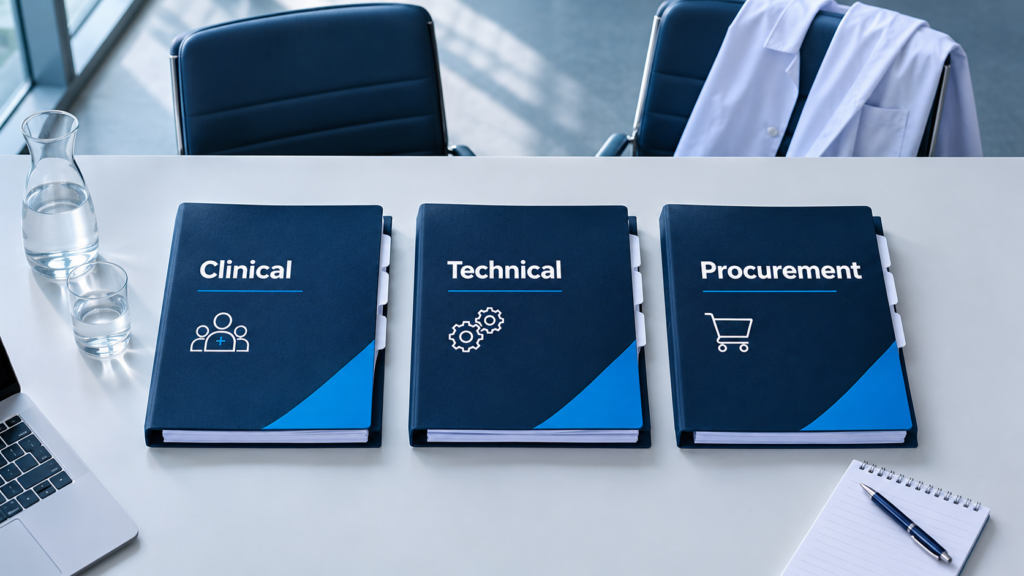
A clinician may want to know whether a device fits an existing workflow. A biomedical engineer may need to check how the hospital would install and maintain it. Procurement may ask which items the quoted price includes. If each person receives the same sales deck, they still have to translate the claims into questions their own teams can evaluate.
For medical device manufacturers and distributors, the practical starting point is to choose one buyer group, one device configuration and one decision the content should support. Then build the materials that help the hospital reach that decision. If your team needs help turning product evidence into content for hospital buyers, explore ICONCLY’s marketing services for medical companies.

Map the people who influence the evaluation
Hospital buying processes differ by institution, device category and market. Start by asking your commercial team who typically initiates a review, who can raise objections and who owns the next decision. Build the content around those roles and confirm the sequence with local sales or distribution teams. The WHO procurement process resource guide provides a broader framework for understanding health technology procurement.
| Buyer or reviewer | Question they need to answer | Material that helps |
| Clinical lead or department head | Does it fit the intended use and the way our team works? | Intended-use summary, relevant evidence and a scenario for evaluation |
| Biomedical engineering or technical operations | Can we install, maintain and support this configuration? | Technical brief covering dependencies, maintenance and support |
| IT and information security, where relevant | What connections, access and data flows would we need to review? | Integration overview and an approved security information pack |
| Procurement or finance | What are we paying for, and which terms affect the total cost? | Itemised offer, cost assumptions and service terms |
For a device with a substantial training requirement, include the people who will train and supervise users. For a connected device, identify the technical lead early so they have time to prepare the documents reviewers will need. Use these insights to shape the content brief before copywriting begins. If you’re unsure which reviewers to prioritise or what evidence to prepare first, discuss your device marketing priorities with ICONCLY Medical.
Turn product claims into evidence buyers can inspect
Build a claim register for the product and market. For each claim, record its source, the applicable model or software version, the conditions under which it holds and who approved the wording. This lets marketing, sales and distributors work from the same materials.
Give clinical reviewers enough context to judge relevance
Start with the device’s intended use, the setting and the users it is intended for. If you summarise a study, explain what it measured, the population or setting it examined and the limits of the finding. Identify the source so the reviewer can assess it directly.
Separate test results, clinical findings and customer observations. A bench test can support a statement about performance under the tested conditions. A clinical outcome claim needs evidence suited to that outcome. A demo can show how a workflow behaves in a controlled setting and give the hospital questions to test during its own evaluation.
Make technical questions answerable before the demo

The technical brief should name the exact configuration being discussed. Include the installation requirements, maintenance responsibilities and support channels relevant to that device. If connectivity is involved, explain which integrations have been documented and which depend on the buyer’s environment.
Keep sensitive technical documents available through an appropriate request route. Give the technical lead a clear contact and explain what information your team needs to respond. Teams should be able to tell which claims apply to the proposed configuration and which depend on an optional module or separate agreement.
Show procurement what changes the cost

Ask the procurement team what it needs to compare offers on the same basis. Specify the exact device configuration, what the quote includes, and which items the hospital would buy separately. For recurring costs, explain the assumptions behind the estimate, such as expected usage, consumables, and scheduled servicing.
- Acquisition. Itemise the device, accessories, installation, and other one-time charges.
- Operation. Explain what drives recurring costs and how different usage levels could affect the estimate.
- Support. Specify what training, warranty, and maintenance the offer covers and who provides local support.
- Renewal or replacement. Flag licence renewals, service contract terms, and replacement costs that could affect the comparison.
Use the same configuration in the quote, the evidence sheet, and the hospital device demo agenda. If the offer changes, update all three so buyers can see which terms apply to the configuration they’re evaluating.pply.
Build a path from first interest to a useful demonstration
Hospital procurement content works best when each piece answers a specific question and points to a useful next action.
- Discovery. Publish an educational brief tied to a department’s evaluation question. Explain the type of decision it faces and link to material the team can share internally.
- Internal review. Provide short clinical and technical briefs with their sources and revision dates. Give the internal sponsor something they can forward to a colleague without having to explain every slide.
- Demonstration. Confirm the role of the requester, the device version, the workflow to be assessed and who should participate. Agree what the session should show and which questions need a separate technical or commercial response.
- Follow-up. Share the agreed configuration, documents and open questions. Assign an owner to each outstanding answer and confirm the next evaluation step with the buyer.
Consider an illustrative supplier preparing a demo for a portable monitoring device. The department lead wants to see how staff would navigate the interface. Biomedical engineering wants to discuss support and maintenance. Procurement is still comparing what each supplier includes. A useful agenda gives the first two groups time for their specific questions and sends procurement an itemised offer separately. The follow-up records what was demonstrated and which items still need verification.
Adapt the message to each market
Build one approved evidence base and adapt the assets by market. Localise the available configurations, language, regulatory wording, distributor responsibilities and support contacts. Review the claims and documents for each intended market before they reach a public campaign or sales presentation.
For example, the US FDA describes distinct pathways on its medical device approval and clearance page. Use market-specific language that matches the actual device and pathway. Have the appropriate reviewer confirm the wording and keep older assets from circulating when a configuration or claim changes.
Measure whether buyers can move forward
Track questions that slow down internal review. If demo requests keep coming from contacts who cannot identify the intended department or use, the first asset may be attracting the wrong audience. If buyers repeatedly ask what the quoted price covers, revise the offer summary and the comparison materials.
Useful measures include qualified demo requests, evaluations that advance to a documented next step and recurring questions answered by existing assets. Review them by device line and market where possible. A rise in downloads can justify investigating interest, while opportunities accepted by sales provide a clearer signal that the materials are reaching suitable buyers.
Before a distributor uses a brief, ask a colleague who did not write it to locate the approved claim, the relevant configuration and the person who owns the next answer. Repeat that check after any major update. Give the assets a revision date and an owner who can retire superseded files from the sales team’s shared folders. A buyer comparing materials from different channels should be able to tell whether they refer to the same offer. If a document contains information relevant only to one country, make that target market explicit in the document itself.
Frequently asked questions
What should a medical device marketing strategy include?
Define the device and market, map the buying group, match claims to approved evidence and choose a next step for each stage of evaluation. Set an owner to review assets and keep them current.
What should hospitals receive before a device demo?
Send the relevant intended-use summary, evidence brief and proposed configuration. Share an agenda that names the workflow to demonstrate, the reviewers to include and any technical questions to address separately.
How can a device distributor adapt manufacturer content?
Use the manufacturer’s approved evidence and check which configurations, claims, service arrangements and contacts apply to the local market. Have the responsible reviewer approve the adaptations before distribution.
How do you measure qualified interest?
Agree on criteria with sales. Useful indicators may include the institution, the requester’s role, the department’s use case and a defined evaluation step. Track those alongside engagement metrics.
Discuss your device marketing priorities
If hospital teams keep requesting the same information before moving forward, start there. Bring one device line, one target market, a recent approved sales deck and the questions your clinical, technical and procurement contacts ask most often. That gives the discussion a clear focus and helps identify which assets would make the next decision easier.
Explore how ICONCLY supports medical companies or contact ICONCLY Medical to discuss your device marketing priorities.