


Dental Marketing Strategies: A Practical Guide for Clinics in the UAE
A dental clinic may offer several services, yet its website and campaigns present them as one general promise: “quality dental care.” That message gives prospective patients little help when they are comparing a routine…
A dental clinic may offer several services, yet its website and campaigns present them as one general promise: “quality dental care.” That message gives prospective patients little help when they are comparing a routine visit, an orthodontic consultation, or an assessment for a more complex concern.
Effective dental marketing strategies make each priority service easier to find, understand, and access. They connect accurate clinical information with local visibility, credible dentist profiles, and a booking process the practice can manage.
For clinics in the UAE, the strategy should reflect branch locations, languages, clinician availability, and the information patients need before requesting a consultation. Marketing works best when those details are built into the patient journey from the beginning.
1. Prioritise Services the Practice Can Support
Choose a manageable set of growth priorities before distributing the budget. Consider appointment capacity, clinician availability, local demand, and the practice’s longer-term objectives.
Separate services that involve different questions or consultation pathways. A parent enquiring about a child’s first visit needs different information from an adult exploring orthodontic options.
Create a brief for each priority service:
- What the service includes and which clinician provides it.
- Which location offers it.
- What prospective patients need to understand.
- What an initial consultation involves.
- How enquiries should be handled.
Suitability for a procedure belongs to clinical assessment. Advertising should invite an appropriate consultation rather than imply that every interested person needs the same treatment.
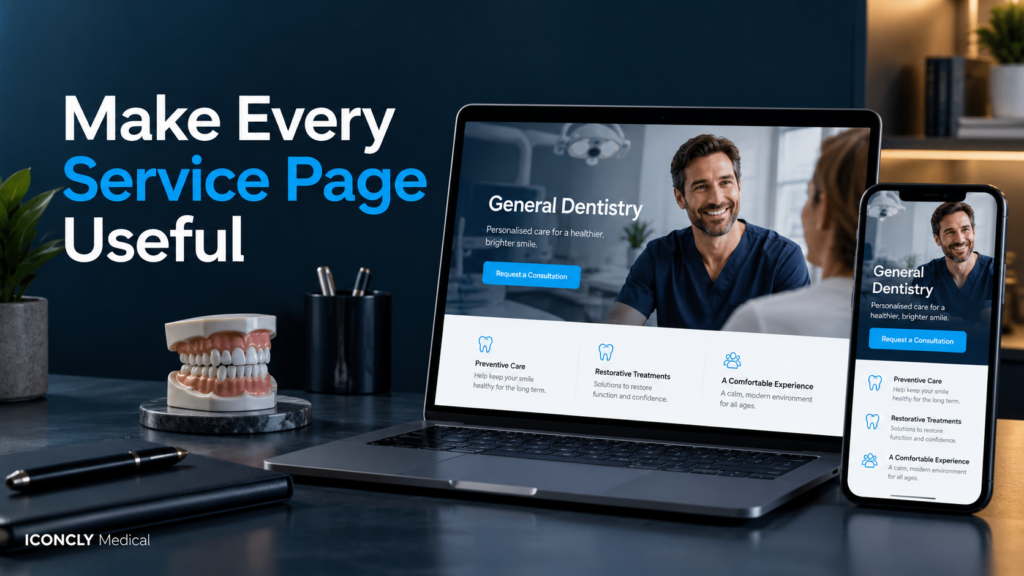
2. Build Service Pages Around Patient Decisions
A dedicated service page should answer the questions that stand between discovery and an informed enquiry.
Explain the service’s purpose, the assessment process, relevant alternatives where appropriate, practical preparation, and the dentist’s verified scope of practice. Identify the location and offer a clear next step.
Where prices appear, state what they include and what may require assessment. Avoid presenting a starting price as the cost of every patient’s complete care plan.
Replace unsupported phrases such as “perfect results” with clear descriptions of the process. Results and treatment suitability depend on individual circumstances; a service page should not promise a particular outcome.
Medical SEO for doctors can support this structure by aligning each page with relevant search intent, internal links, and location information.

3. Improve Local Visibility for Each Real Branch
Audit each location’s public information. Confirm the practice name, address, phone number, opening hours, and website destination. Check whether directions and parking information are clear.
Link each branch to a useful location page containing the dentists and services available there. A patient finding a branch should not have to contact several numbers to learn where a consultation is offered.
For clinics with multiple branches, avoid copying an entire service page and changing only the city name. Include real differences in availability, team, access, and scheduling where they exist.
Local visibility should serve accurate access. Do not create profiles or location claims for places where the clinic does not operate.
4. Show Verified Expertise and a Clear Consultation Process
Prospective patients need more than a photograph and a job title. Dentist profiles should present current qualifications, areas of practice, relevant experience, and where appointments are available.
Explain the initial visit in practical terms: who the patient may see, whether an assessment precedes a treatment plan, and how further information is provided. Use only details that reflect the actual practice workflow.
Publish educational content with appropriate clinical review. A concise explanation of what an orthodontic consultation assesses can be more useful than several promotional posts about a smile transformation.
Keep marketing language consistent with the dentist’s verified credentials. Avoid titles, rankings, or claims of superiority that the practice cannot substantiate.
5. Manage Reviews Without Making Them the Entire Strategy
Maintain a process for monitoring and responding to reviews, and investigate recurring administrative concerns. Protect confidentiality in public replies and move sensitive discussions to an authorised private channel.
Invite voluntary, honest feedback through a consistent process. Google’s review policy prohibits review incentives and selectively soliciting positive feedback. Do not attach a discount to a review or pressure patients to write prescribed wording.
Reviews can describe someone’s experience, but they do not establish that another patient will achieve the same clinical outcome. Use them alongside accurate professional and service information.
6. Use Paid Search Only When the Appointment Route Is Ready
Organise campaigns around the service and geographic area the clinic can realistically support. Send the visitor to a relevant page and make the initial contact process clear.
Review search terms to identify unrelated intent, such as employment searches, training courses, or services the practice does not offer. Different services may need separate messaging and budgets.
Google’s healthcare advertising policy includes category and location restrictions. Check the actual service and campaign configuration before launch rather than assuming all dental advertising has identical requirements.
Do not increase spending simply because enquiries are inexpensive. Verify whether those enquiries lead to confirmed, attended consultations and whether the team can handle additional demand.
ICONCLY’s PPC service for doctors can support campaigns within a wider service and patient journey strategy.
7. Make Social Content Useful Before Making It Promotional
Use clinician-reviewed videos and explanations to address questions about consultation processes, professional roles, and practical access. Show the real practice environment where appropriate without revealing patients or confidential information.
Patient images and testimonials need careful approval. DHA’s social media advertising standards set consent and content requirements for facilities under its jurisdiction. Verify the current requirements of the clinic’s relevant authority before publication.
Do not imply that before-and-after images represent a result every viewer can expect. Consent, clinical accuracy, context, and applicable advertising requirements all need consideration.
For Arabic and English content, check that the service explanation and appointment information remain consistent. Natural phrasing matters, but it must preserve the approved meaning.
8. Treat Reception and Follow-Up as Part of Dental Marketing
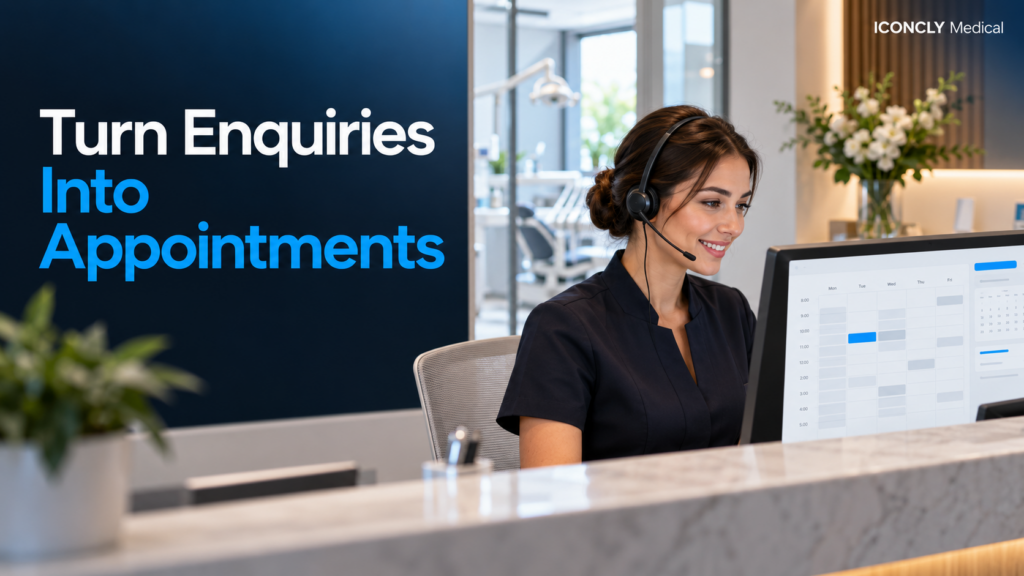
Enquiry handling can determine whether interest becomes an appointment. Assign ownership for calls, approved messaging channels, and website requests during staffed hours.
Give administrative staff a verified reference for service availability, branch details, and the initial consultation process. Staff should route clinical questions to the appropriate professional rather than make treatment recommendations.

Record unanswered enquiries, booking outcomes, and attendance within authorised systems. Follow up according to the practice’s communication policies and the patient’s choices.
Measure Performance by Service and Location
Use a compact dashboard to distinguish traffic from useful outcomes:
| Metric | Practical question |
| Relevant service-page visits | Are prospective patients finding the right information? |
| Unique enquiries | How many people actually contact the practice? |
| Enquiry-to-booking rate | Does contact lead to scheduled consultations? |
| Booking-to-attendance rate | Do scheduled new patients attend? |
| Cost per attended first appointment | What does attributable acquisition cost? |
| Available appointment capacity | Can the practice support further promotion? |
Keep patient records in approved systems and use a privacy-reviewed approach to attribution. Report uncertain sources as uncertain instead of assigning every appointment to marketing.
For an illustrative practice with many enquiries but few available orthodontic appointments, additional promotion may intensify an access problem. Adjust campaign scope and communicate availability before increasing the budget. This is a planning example, not a reported ICONCLY case study.
A Practical 90-Day Implementation Plan
Days 1–30: select priority services, audit branch information, review dentist profiles, and document enquiry handling.
Days 31–60: improve service pages, publish a focused educational content series, and launch or refine campaigns where capacity and approval allow.
Days 61–90: assess enquiries, bookings, attendance, and cost by service. Resolve the main demonstrated bottleneck before expanding investment.
The timetable provides an implementation structure, not a promise of rankings or new patient numbers.
Bring the Five Core Services Into One Dental Growth Plan
Dental marketing should connect discovery, professional confidence, and access. SEO for doctors supports relevant service and location searches. Doctor website design helps visitors understand the available dental services and reach the appropriate branch.
Personal branding for doctors communicates each dentist’s verified expertise and scope of practice. Social media for doctors turns that expertise into useful, reviewed explanations for prospective patients.
PPC for doctors can support priority services with approved messaging, suitable appointment capacity, and clear landing pages. Select the service mix according to the practice’s actual bottleneck and measure outcomes by service and location.
Frequently Asked Questions
What are the most useful dental marketing strategies?
Clear service pages, accurate local profiles, verifiable dentist information, useful educational content, and reliable enquiry handling form a practical foundation. Channel priorities should follow the clinic’s evidence and capacity.
Should a dental clinic advertise every treatment?
Prioritise services the practice can support with accurate information, appropriate clinical availability, and a clear consultation route.
Is dental social media marketing enough on its own?
Social media can support awareness and understanding, but patients may also need service pages, location details, and a dependable booking process before making contact.
How should a dental clinic assess marketing success?
Track useful enquiries, confirmed bookings, attended initial appointments, and attributable cost. Interpret results alongside availability and other changes affecting demand.
Build a Dental Marketing Strategy Around Real Patient Access
ICONCLY Medical helps clinics connect search visibility, professional authority, content, and patient enquiries. The first step is diagnosing which services need growth and where the current digital journey creates uncertainty.
Explore ICONCLY’s solutions for clinics to discuss dental marketing strategies built around your team, locations, and measurable appointment outcomes.